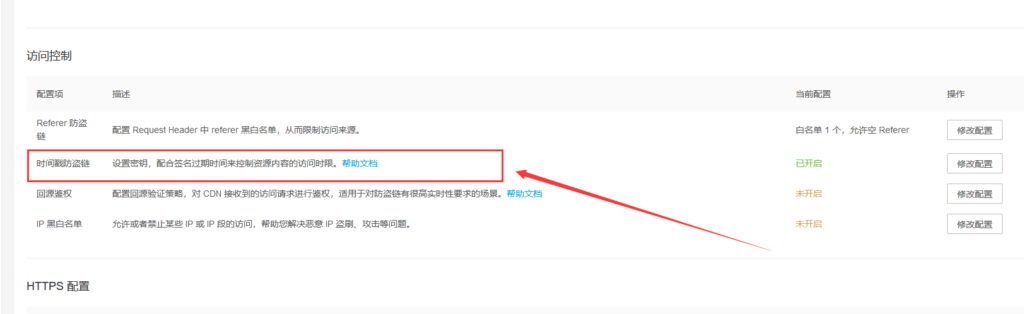

Back-to-origin authentication refers to a feature used in content delivery networks (CDNs) to verify whether a request has permission to access the original content on the origin server. When a user requests a resource, CDN will first check whether the request requires return-to-origin authentication.
The main purpose of back-to-source authentication is to protect resources on the source server from direct access by unauthorized users. It can prevent hot links, malicious downloads, illegal dissemination and other behaviors, and improve the security and resource usage efficiency of the source server. Only requests that pass authentication verification will be forwarded by the CDN to the origin server to obtain resources, otherwise an error message will be returned.
Specifically, the back-to-origin authentication function usually includes the following steps:
- User requests resources: The user sends a request to the CDN to obtain a certain resource (such as pictures, videos, etc.).
- CDN verifies authentication information: CDN checks the authentication information attached to the request, such as keys, tokens, etc.
- Authentication information verification: CDN will compare the authentication information with preset rules to verify whether the request is legal.
- Verification passed: If the authentication information passes the verification, the CDN will forward the request to the origin server, obtain the original resources and return them to the user.
- Verification failure: If the authentication information fails to be verified, the CDN will reject the request and may return an error message or redirect to another page.
The back-to-origin authentication function can be configured according to needs and can be used in conjunction with other security mechanisms (such as access control lists, firewalls, etc.) to provide a higher level of resource protection and access control. It improves user experience and website performance while protecting origin server resources from unauthorized access.