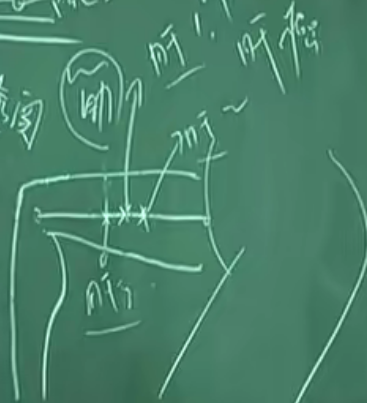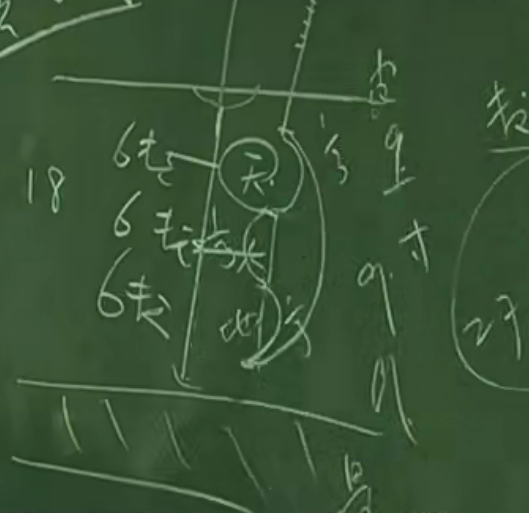
Meridians are connected with meridians, collateral points
There are two causes of disease
Internal causes: happiness, anger, sadness, joy, worry, thoughts, sadness, fear (emotions); diet
External causes: wind, cold, heat, dampness, dryness, heat -----to the collaterals---to the meridians---to the fu organs---to the internal organs
Kidneys determine a person's lifespan - the root of all meridians
There are fifteen networks
Heart Qi stops at the diaphragm---below the tenth vertebra---heart Qi stagnation (Tiantu, Juque, Guanyuan, and finally under the tenth vertebra)
Fifteen Luo Mai Song (Yi Jing Primary School)
There are 15 collaterals in the human body. I will list them from the beginning one by one:
The Taiyin collaterals of the hands are Lieqi, and the Shaoyin collaterals of the hands are connected to the inside.
The Jueyin collateral of the hand is Neiguan, and the branch of the Taiyang collateral of the hand is exactly the same.
The Yangming collateral of the hand is in the Lidang position, and the Shaoyang collateral of the hand is in the outer guan position.
The trumpet of the Yangtai River is flying, and the Yangming River is prosperous and prosperous.
The Shaoyang collateral of the foot is bright, and the Taiyin collateral of the foot is Gongsunji.
The foot Shaoyin collateral is named Dazhong, and the foot Jueyin collateral is named Ligou.
The channels of Yang Du are long and strong, and the channels of Yin Ren are tail shadows.
The large collaterals of the spleen are called Dabao, and the names of the fifteen collaterals must be remembered.
Fifteen collaterals table:
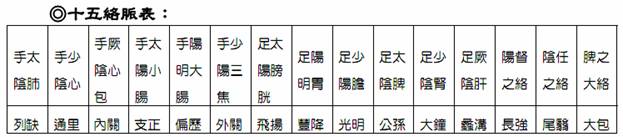
Differentiation of Fifteen Collateral Meridians and Points (Medical Tradition)
The fifteen collaterals are the twelve meridians that are different but connected.
The remaining three collaterals are the collaterals of the two meridians of Ren and Du, the larger collaterals of the spleen, and the collaterals of Yin and Yang, which irrigate the internal organs.
"Difficult Classic" states that the three collaterals are Yang Qiu and Yin Qiu. There are no acupoints that can be pointed out by regular examination. Moreover, the two-faulted posture is not correct in the Fourteen Classics.
"Essentials of Acupuncture and Moxibustion" holds that the Ren collateral is called Weiyi, and the Supervisory collateral is called Changqiang. Based on the correct principle of "Fourteen Classics", the large collateral of the spleen is called Dabao, which combines the fifteen collaterals.
Fifteen collaterals (Essentials)
The other collaterals of Taiyin on the hand are called Lieque. It originates from the divide on the wrist, joins the Taiyin meridian, goes straight into the palm, and disperses into the fish. In actuality, the disease is characterized by heat in the hands and palms, causing diarrhea; if the condition is deficient, the symptoms include shortness of breath and frequent urination, which needs to be replenished. Remove the wrist and half an inch, don't go to Yangming.
The different collaterals of Shaoyin on the hand are called Tongli. Remove an inch from the wrist, do not go to the sun, follow the meridian, enter the heart, tie to the tongue, belong to the eye system, if it is true, it will support the diaphragm and purge it; if it is deficient, it will not be able to speak, so make up for it.
The collateral of Jueyin on the hand is called Neiguan. Remove two inches of the palm between the two tendons, do not go to Shaoyang, follow the meridian and tie it to the pericardium and heart system. If it is true, it will cause heartache, so relieve it; if it is deficient, it will cause a strong head, so it will be replenished.
The different collaterals of the sun on the hand are called Zhizheng. Five inches above the wrist, don't go to Shaoyin, the other part goes up to the elbow, and connects to the shoulder. In actuality, if the joints are loose and the elbows are weak, treat it with diarrhea; if it is empty, warts will appear, and if they are small, such as scabies on the fingers, treat them.
The different collaterals of Hand Yangming are called Pianli. Remove three inches from the wrist, don't go to Taiyin; the other part, go along the arm, ride on the shoulder, and go up to bend the cheek and the teeth; the other part, go into the ear, and connect with the ancestral meridian. If it is true, it will lead to caries and deafness and diarrhea; if it is deficient, it will cause cold teeth and numbness of the diaphragm, so it will be replenished.
The other collaterals of Shaoyang of the hand are called Waiguan. Remove two inches from the wrist, wrap around the outside of the arm, and inject it into the chest. Don't use Jueyin of the hands. If it is true, it means elbow contracture, purge it; if it is deficient, it will not contract, so nourish it.
The other collaterals of the foot of the sun are called Feiyang. Remove seven inches from the ankle, don't go to Shaoyin. If it is true, it will lead to suffocation, head and back pain, and diarrhea; if it is deficient, it will lead to suffocation, head and back pain, and diarrhea.
The different collaterals of Shaoyang of the foot are called Guangming. They are removed five inches from the ankles. They do not go to Jueyin and go down to the metatarsal of the feet. If it is true, it will cause diarrhea and diarrhea; if it is deficient, it will cause flaccidity and inability to sit up, so take supplements.
The other collaterals of Foot Yangming are called Fenglong. Remove eight inches from the ankle and don't go to the taiyin. The other symptoms are along the outer ribs of the tibia, superior to the head and neck, combining the Qi of all the meridians, and inferior to the throat. The disease is caused by laryngeal paralysis and muteness when the Qi is reversed. In actuality, it is madness and diarrhea; when it is deficient, the legs are unable to contract and the shins are withered, and the patient needs to be replenished.
The other collateral of foot Taiyin is called Gongsun. Go an inch after this section, don't go Yangming. Otherwise, if it enters the intestines and stomach, and the Qi goes up and down, it will lead to cholera. If it is true, it will cause pain in the intestines, and it will be purged; if it is deficient, it will cause bloating, and it will be replenished.
The other collaterals of Foot Shaoyin are called Dazhong. When the back of the ankle wraps around the heel, don't go to the sun; on the other side, go up and down the pericardium and run through the waist and spine. The disease qi is inverse and depressing, and when it is in reality, it is closed and swollen with diarrhea; when it is deficient, it causes low back pain, and it is supplemented.
The other collaterals of Zujueyin are called Ligou. Remove five inches from the medial malleolus, do not go to Shaoyang; the other part goes through the testis on the tibia and knots with the stem. If the Qi is reversed, the testes will be swollen and cause hernia. If the Qi is in excess, the testes will become elongated and have diarrhea; if the Qi is deficient, it will cause severe itching, so supplement the symptoms.
The other collaterals of the Ren meridian are called tail nebula, which is located at the lower dove tail and spreads in the abdomen. If it is true, it will cause abdominal skin pain and diarrhea; if it is deficient, it will cause itching and scratching, and it will be treated with tonic.
The different collaterals of the Governor Vessel, named Changqiang, go to the upper part of the Xia Yin, spread out on the head, and go down to the left and right sides of the shoulder blades. Don't go to the sun, and enter the Guan Yin. If it is true, the spine will be strong, and it will be relieved; if it is deficient, the head will be heavy and shaking, so it will be replenished.
The large collaterals of the spleen are called big bags. Three inches below the Yuanyuan liquid, it spreads across the chest and side. If it is real, it will cause pain all over the body, and it will be purged; if it is empty, all the joints will be wet, and it will be replenished.
All these fifteen collaterals must be seen if they are real, and must go down if they are empty. If you ignore them, you must look up and down. People's meridians are different, and their collaterals are different.