

不同的網站所需要的緩存功能不一樣,有的網站只需要緩存所請求的get信息,但是有的網站卻需要緩存完整url的信息,這裏記錄一個常用到的緩存代碼,目前已經寫好了.
緩存代碼
<?php
//緩存存放目錄
define('CACHE_ROOT', dirname(__FILE__) . DIRECTORY_SEPARATOR . 'empirecms');
//緩存時間 單位秒
define('CACHE_TIME', 86400*7);
//緩存文件後綴
define('CACHE_FIX','.php');

date_default_timezone_set("Asia/Shanghai");
$CacheName=md5($_SERVER['HTTP_HOST'].$_SERVER['REQUEST_URI']) . CACHE_FIX; //緩存文件名
$CacheDir=CACHE_ROOT . DIRECTORY_SEPARATOR . substr($CacheName,0,1);//緩存文件存放目錄
$CacheUrl=$CacheDir . DIRECTORY_SEPARATOR . $CacheName;//緩存文件的完整路徑

//GET方式請求才緩存,POST之後一般都希望看到最新的結果
if($_SERVER['REQUEST_METHOD']!='POST'){
  //如果緩存文件存在,並且沒有過期,就把它讀出來。
  if(file_exists($CacheUrl) && time()-filemtime($CacheUrl)<CACHE_TIME){
    echo gzuncompress(file_get_contents($CacheUrl));
    exit;
  }
  //判斷文件夾是否存在,不存在則創建
  elseif(!file_exists($CacheDir)){
    if(!file_exists(CACHE_ROOT)){
      mkdir(CACHE_ROOT,0777);
      chmod(CACHE_ROOT,0777);
    }
    mkdir($CacheDir,0777);
    chmod($CacheDir,0777);
  }
  //回調函數,當程序結束時自動調用此函數
  function AutoCache($contents){
    global $CacheUrl;
    $fp=fopen($CacheUrl,'wb');
    $contents = "<!--站長qq:1810216796 緩存更新時間: ".(date("Y-m-d H:i:s", time()))."-->\r\n".$contents;
    fwrite($fp,gzcompress($contents));
    fclose($fp);
    chmod($CacheUrl,0777);
    //生成新緩存的同時,自動刪除所有的老緩存,以節約空間,可忽略。
    DelOldCache();
    return $contents;
  }
  function DelOldCache(){
    chdir(CACHE_ROOT);
    foreach (glob("*/*".CACHE_FIX) as $file){
      if(time()-filemtime($file)>CACHE_TIME) unlink($file);
    }
  }
  ob_start('AutoCache');//回調函數 auto_cache
  clearstatcache();//清除文件緩存
}else{
  //不是GET的請求就刪除緩存文件。
  if(file_exists($CacheUrl)) unlink($CacheUrl);
}
?>
使用方法
使用的話,直接引用代碼即可
代碼重點
主要是php的回調函數不好理解,惡補一些基礎後,勉強可以理解,其中ob_start這個函數我去查了一下手冊,具體如下: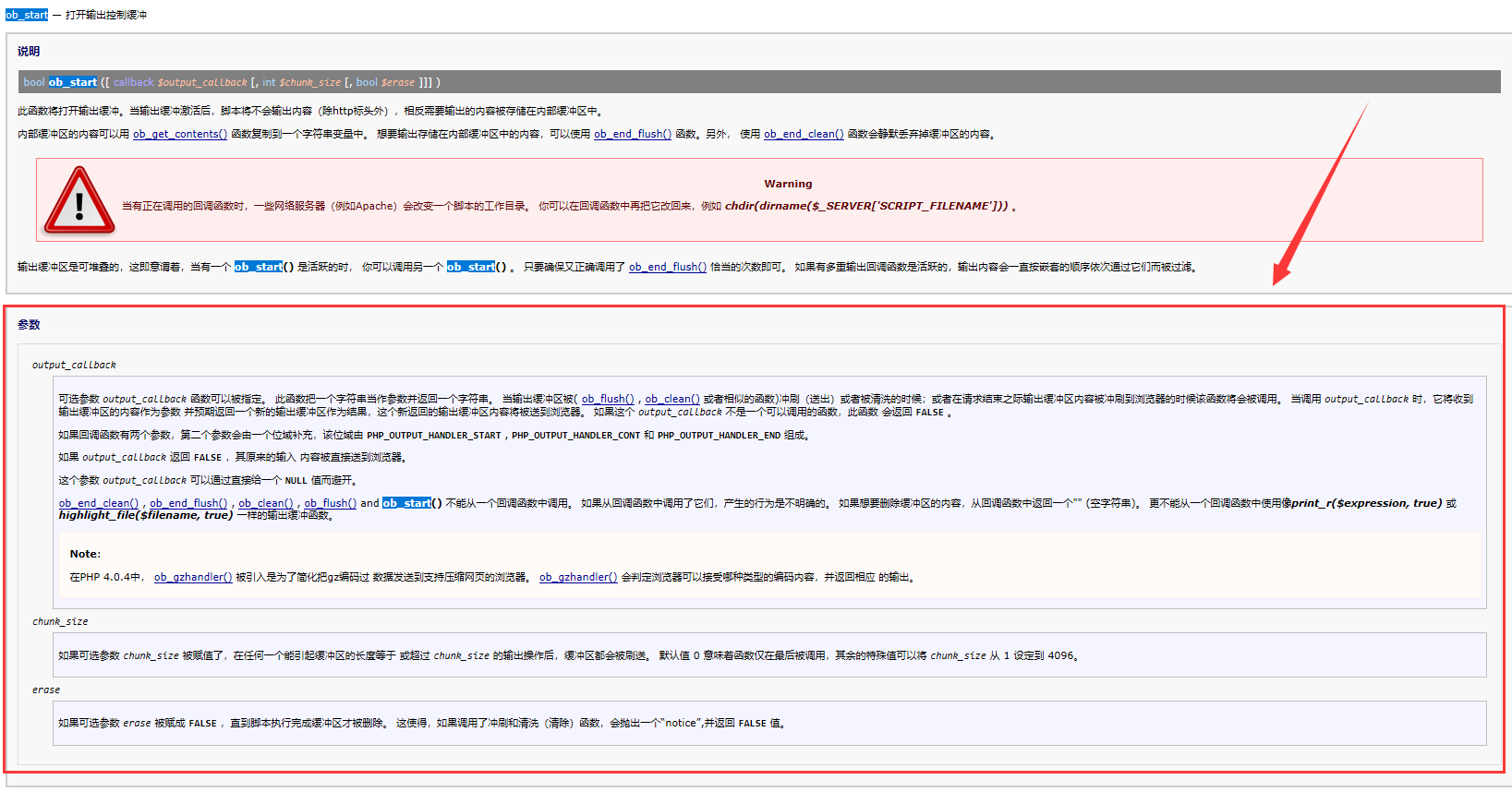
ob範例
用戶自定義回調函數的例子
<?php
function  callback ( $buffer )
{
   // replace all the apples with oranges
   return ( str_replace ( "apples" ,  "oranges" ,  $buffer ));
}
 ob_start ( "callback" );
?>
<html>
<body>
<p>It's like comparing apples to oranges.</p>
</body>
</html>
<?php
ob_end_flush ();
 ?>
以上例程會輸出:
<html>
<body>
<p>It's like comparing oranges to oranges.</p>
</body>
</html>